The Stanley J7C review centers on a practical combination: a 12-volt jump starter, 120 PSI air inflator, and three USB charging ports in one portable unit.
Its lead-acid battery and vehicle-focused design suit drivers who value having several roadside tools together and can accommodate a roughly 10-pound device.
Stanley J7CS Review Summary
The quick verdict
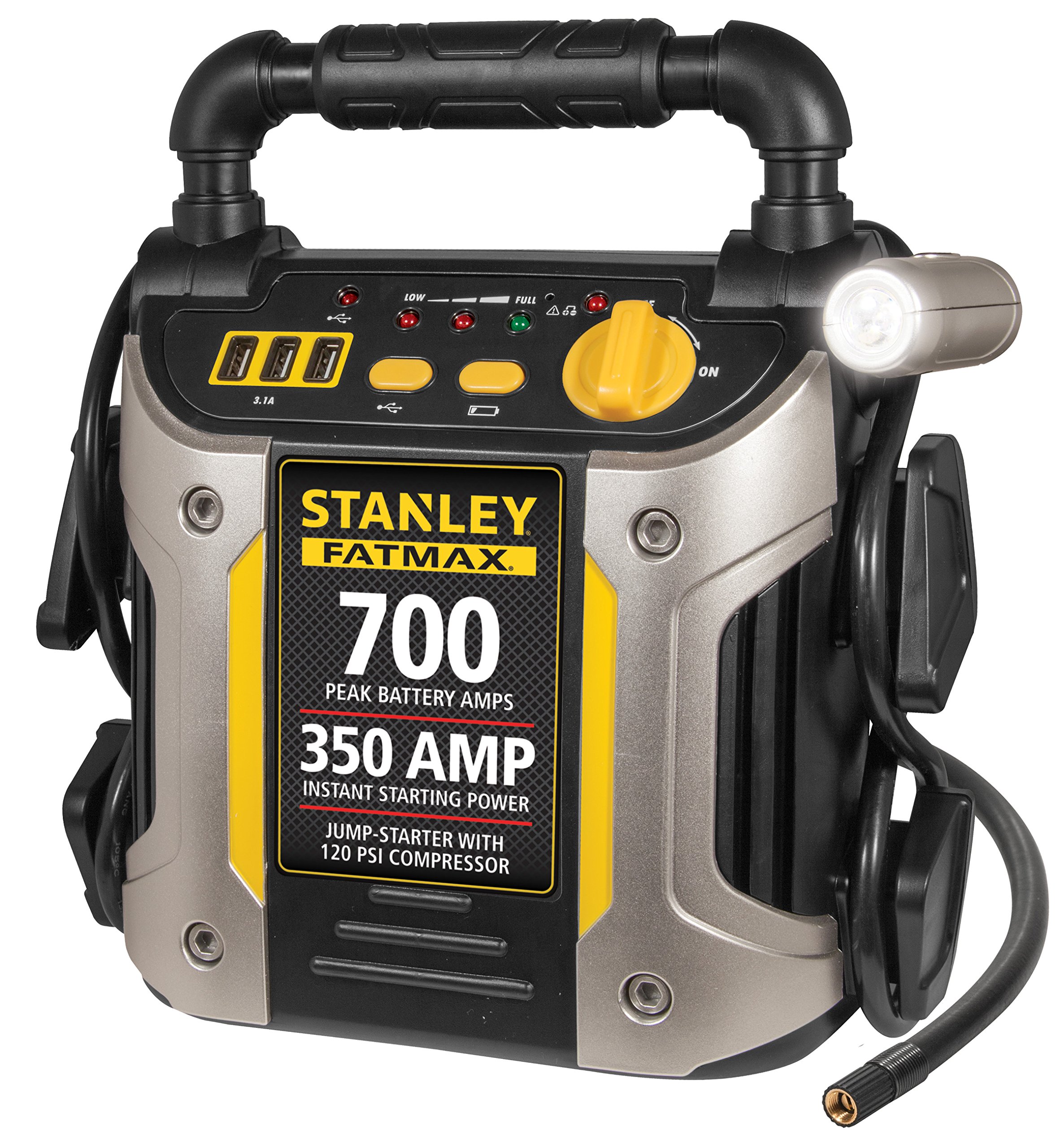
10,000+ ratings
Read Amazon ReviewsStanley FATMAX J7CS
A fit for drivers who want a portable 12-volt jump starter with an integrated tire inflator and USB charging for everyday roadside preparedness.
- 12-volt jump starter with 700 peak amps and 350 instant starting amps.
- Sealed lead-acid battery with a listed capacity of 21 amp-hours.
- 120 PSI air inflator for tires, sports equipment, and bicycle or scooter tires.
- Inflator includes a 10-minute automatic shutoff intended to avoid heat damage if left on unintentionally or unattended.

Pros
- Combines a jump starter and 120 PSI inflator in one device.
- Reverse-polarity alarm offers a helpful connection warning.
Consider before buying
- At 10.3 pounds, it takes more space and effort to carry than a compact jump pack.
- The supplied fit details identify passenger cars but do not specify engine-size limits, so confirm compatibility for your vehicle.
Read the full review summary
The Stanley FATMAX J7CS combines a 700-peak-amp jump starter with a 120 PSI inflator and three USB ports rated at 3.1A.
A reverse-polarity alarm adds a useful connection prompt, while the inflator’s 10-minute automatic shutoff is designed to limit heat-related risk if it is left running unintentionally.
This setup is most appealing for passenger-car owners who want a jump pack and tire top-up tool together, plus a way to charge small USB devices.
It weighs 10.3 pounds and uses a sealed lead-acid battery, so buyers should consider storage space and be prepared to maintain a charged unit.
The supplied fit information identifies passenger cars; check your vehicle’s requirements before relying on it.
The buying factors
Stanley J7CS Scorecard
Editorial scores reflect listed features and buyer fit; they are not laboratory measurements or customer ratings.
Jump-start output
The 700 peak amps and 350 instant starting amps give the unit a clear passenger-car jump-starting role, though the supplied fit information does not specify engine-size limits.
Inflator usefulness
A 120 PSI inflator broadens its roadside use to tires and smaller inflatables, with a 10-minute automatic shutoff.
Connection guidance
The reverse-polarity alarm can alert the user to an improper clamp connection before proceeding.
Device charging
Three USB ports rated at 3.1A offer several charging connections, although no USB-C port or per-port output details are provided.
Portability
Its 10.3-pound weight and roughly 10.5-by-6.7-by-11-inch dimensions make it portable between storage spots, but not especially light to carry.
All-in-one convenience
Jump starting, inflation, and USB charging share one unit, reducing the need to keep each tool separately.
Key Features and Specifications of Stanley J7CS
- 12-volt jump starter with 700 peak amps and 350 instant starting amps.
- Sealed lead-acid battery with a listed capacity of 21 amp-hours.
- 120 PSI air inflator for tires, sports equipment, and bicycle or scooter tires.
- Inflator includes a 10-minute automatic shutoff intended to avoid heat damage if left on unintentionally or unattended.
- Three USB ports rated at 3.1A for charging devices.
- Reverse-polarity alarm alerts when the clamps are connected improperly.
- Measures about 10.5 by 6.7 by 11 inches and weighs 10.3 pounds; clamps and cables are included.
Pros and Cons of Stanley J7CS
Pros
- Combines a jump starter and 120 PSI inflator in one device.
- Reverse-polarity alarm offers a helpful connection warning.
- Automatic inflator shutoff adds a defined limit to an unattended inflation cycle.
- Three USB ports support charging multiple devices.
Consider before buying
- At 10.3 pounds, it takes more space and effort to carry than a compact jump pack.
- The supplied fit details identify passenger cars but do not specify engine-size limits, so confirm compatibility for your vehicle.
- The sealed lead-acid battery and lack of stated recharge intervals make charging and storage care worth checking in the instructions.
Who Should Buy Stanley J7CS?
Good fit
Consider the J7CS if you want one vehicle-based emergency unit that can assist with a 12-volt jump start, inflate tires, and charge USB devices.
Its 700 peak amps, reverse-polarity alarm, and included clamps and cables address the core jump-start setup, while the integrated inflator adds practical utility for routine tire top-ups.
It is especially suitable for drivers who can store a larger, heavier unit in a trunk or garage and prefer fewer separate tools.
The 10-minute shutoff helps provide a defined inflation cycle; follow the operating instructions and allow the inflator to rest as directed for the task.
Before buying, compare the unit’s starting output with your vehicle’s needs and confirm that the passenger-car fit applies to your specific vehicle.
Also plan where to keep and recharge a sealed lead-acid device so it is ready when needed.
Who should skip it
Skip this design if your priority is a very light, compact booster to keep in a small glove compartment or carry frequently; the unit weighs 10.3 pounds and is around 11 inches tall.
Look elsewhere if you need a jump starter with a clearly stated engine-size range or a different charging connection profile.
The supplied specifications do not state those details, so they should be confirmed before choosing it for a specialized vehicle or device-charging routine.
Stanley J7CS Review: What the Combined Design Means
A jump starter aimed at passenger cars
The J7CS is a 12-volt unit with 700 peak amps and 350 instant starting amps. Those figures describe its stated jump-start output, while the vehicle fit information points to passenger cars.
Since no engine-size range is given, buyers should compare their vehicle’s requirements with the manual and product guidance rather than assume suitability for every car or truck.
The inflator adds everyday utility
A 120 PSI maximum gives the built-in inflator a broad stated pressure ceiling, and its listed uses include tires, sports equipment, and bike or scooter tires.
The 10-minute automatic shutoff is designed to prevent heat damage if the pump is accidentally left running.
It can make this unit useful beyond a battery emergency, though users should still follow the operating directions for the item being inflated.
Connection and charging details
The reverse-polarity alarm provides feedback if the clamps are connected improperly, a practical aid when setting up a jump. Three 3.1A USB ports let the unit serve as a charging source for devices.
The available specifications do not break down output by port, so check device charging requirements if speed or a particular connection type matters.
Size and battery upkeep
At 10.3 pounds, the J7CS is better thought of as portable equipment for a trunk or garage than a pocketable booster.
Its sealed lead-acid battery offers a listed 21 amp-hours of capacity, but buyers should consult the included instructions for charging and storage care. Readiness depends on maintaining the unit appropriately between emergencies.
Alternatives to Stanley J7CS
Jump Starters alternative
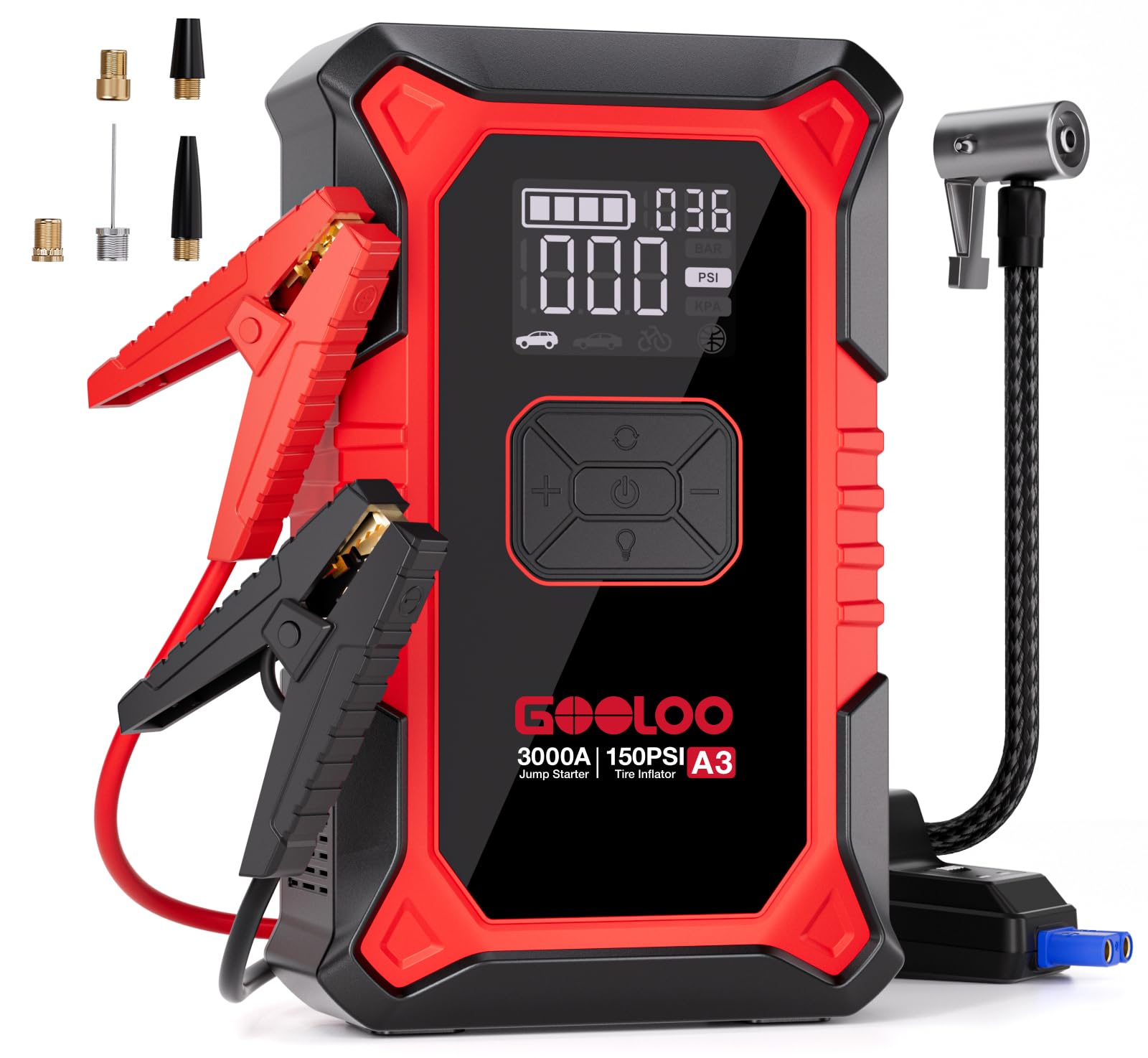
4,000+ ratings
Read Amazon ReviewsGOOLOO A3 Jump Starter with Air Compressor
Choose the Stanley if its simpler output and three-port USB setup suit a passenger-car kit and you want its stated reverse-polarity alarm.
Consider the GOOLOO A3 if you want a higher stated starting output, more pressure, and selectable inflation modes; compare those capabilities with your vehicle and routine.
- The GOOLOO A3 combines a 3000-amp jump starter with a 150 PSI inflator, a digital pressure display, five inflation modes, and automatic shutoff.
- Its description lists support for gas engines up to 9.0L and diesel engines up to 6.5L, as well as USB device charging.
- The Stanley J7CS pairs a 700-peak-amp, 12-volt jump starter with a 120 PSI inflator, three 3.1A USB ports, and a reverse-polarity alarm; its listed battery is sealed lead-acid.
Battery-focused alternative
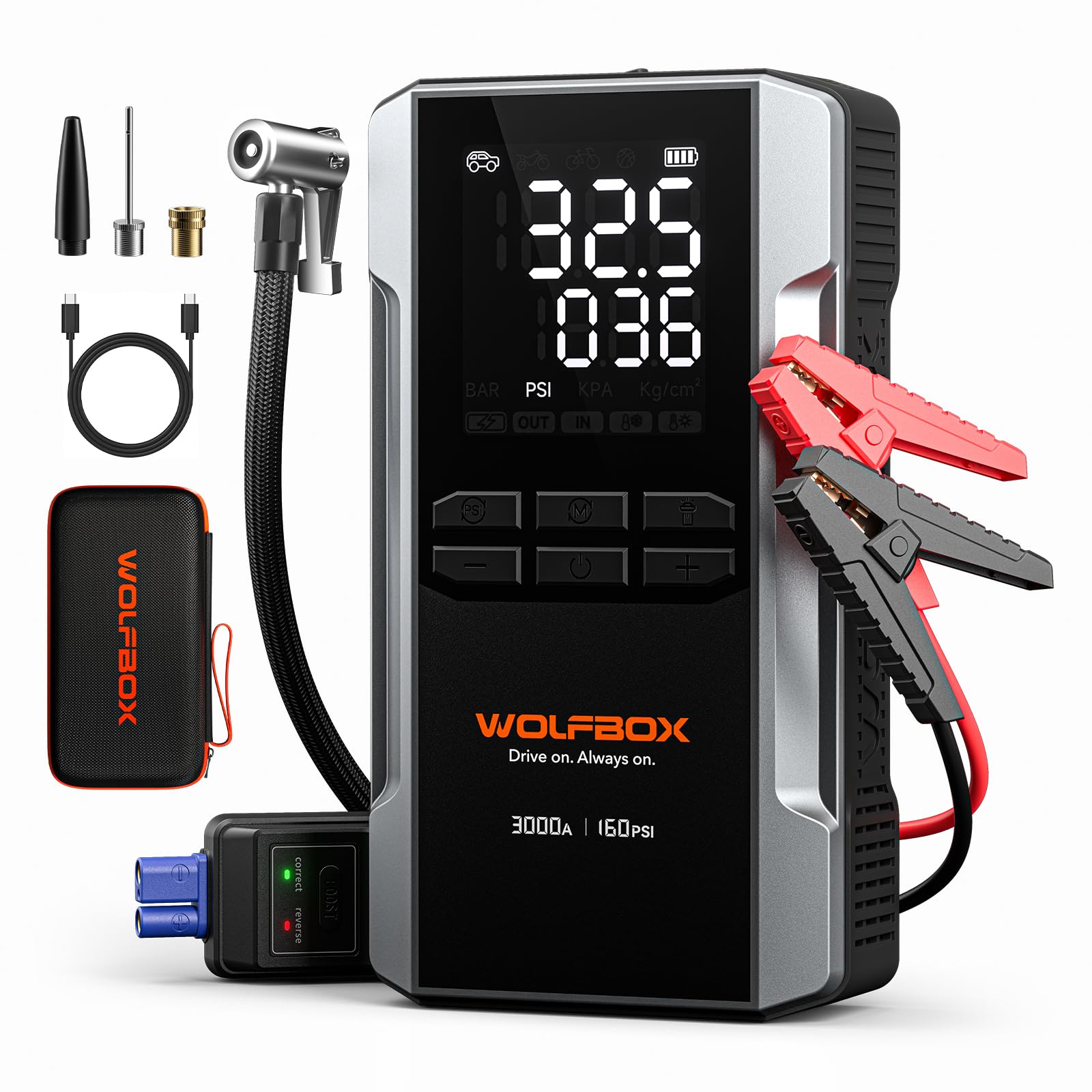
1,000+ ratings
Read Amazon ReviewsWOLFBOX MV16A Jump Starter with Air Compressor
The Stanley may suit drivers who want a straightforward integrated inflator and USB charging for a passenger-car kit.
The WOLFBOX offers higher stated jump-start output, a higher-pressure compressor, and USB-C charging, which may better match buyers seeking those additional capabilities.
- The WOLFBOX MV16A combines a 3000-amp jump starter with a 160 PSI, 45-liter-per-minute compressor.
- It lists a 59.2Wh battery, USB-C 65W charging, USB-A ports, and inflation support for pickup-truck tires and smaller vehicles.
- The Stanley J7CS includes a 120 PSI inflator, 700 peak amps of jump-start output, and three 3.1A USB ports in a 10.3-pound sealed lead-acid unit.
Is Stanley J7CS Worth It?
The Stanley FATMAX J7CS is worth considering as a multi-purpose roadside unit for passenger-car owners who want jump-starting, tire inflation, and USB charging together.
Its 700 peak amps, 120 PSI inflator, reverse-polarity alarm, and automatic pump shutoff make a useful feature set for a trunk-based kit.
The tradeoffs are its 10.3-pound size and the need to confirm vehicle compatibility and battery-care instructions for your own situation.
If those fit your needs, it offers a practical combination of emergency functions; if you need a lighter pack or more clearly specified vehicle coverage, compare options with those requirements in mind.
Your review at a glance
10,000+ ratings
Read Amazon ReviewsStanley FATMAX J7CS
A fit for drivers who want a portable 12-volt jump starter with an integrated tire inflator and USB charging for everyday roadside preparedness.
- 12-volt jump starter with 700 peak amps and 350 instant starting amps.
- Sealed lead-acid battery with a listed capacity of 21 amp-hours.
- 120 PSI air inflator for tires, sports equipment, and bicycle or scooter tires.
- Inflator includes a 10-minute automatic shutoff intended to avoid heat damage if left on unintentionally or unattended.