When it comes to optimizing engine performance, having the right data logging system is essential. You’ll want a tool that not only tracks essential metrics but also offers ease of use and robust connectivity. In this guide, we’ll explore ten top-rated options that cater to professionals like you. Each system has unique features that could make a significant difference in your diagnostics and performance analysis, and you won’t want to miss the insights ahead.
PT30 ELD Device for Heavy-Duty Trucks

The PT30 ELD Device is your go-to choice if you operate heavy-duty trucks, as it’s specifically designed for vehicles like Freightliner, International, and Peterbilt. With its plug-and-play installation, you can easily connect it to your truck’s diagnostic port without any tools. This device is FMCSA compliant, guaranteeing you meet all regulatory requirements for Hours-of-Service. It supports major ELD apps on both Android and iOS, offering seamless connectivity through Bluetooth for live logs and data sync. Plus, its rugged design guarantees reliability on the road while maintaining low power consumption, making it a smart choice for your trucking needs.
Best For: The PT30 ELD Device is best for operators of heavy-duty trucks, particularly those using Freightliner, International, and Peterbilt vehicles.
Pros:
- Plug-and-play installation allows for quick and easy setup without the need for tools.
- FMCSA compliant, ensuring adherence to Hours-of-Service regulations and simplifying inspections.
- Bluetooth connectivity enables live logs, data sync, and automatic uploads for seamless operation.
Cons:
- Limited compatibility with other truck brands outside of the specified major manufacturers.
- May require compatible ELD apps for full functionality on mobile devices.
- Rugged design, while beneficial, may add weight to the overall setup.
FOXWELL NT630 Plus OBD2 Scanner with ABS and SRS

For automotive professionals seeking a reliable tool for ABS and SRS diagnostics, the FOXWELL NT630 Plus OBD2 Scanner stands out with its advanced features. It reads DTCs, displays live data, and clears ABS error codes after repairs. With its bidirectional capabilities, you can activate pumps and valves for thorough troubleshooting. The scanner also offers an ABS bleeding function to restore brake pedal firmness. Its user-friendly design includes a 2.8 LCD screen and hassle-free WiFi updates. While it lacks SRS error code clearing and is limited to compatible vehicles, it’s a cost-effective solution for everyday diagnostics.
Best For: Automotive professionals and enthusiasts who need a reliable tool for advanced ABS and SRS diagnostics.
Pros:
- Advanced Diagnostics: Capable of reading DTCs, displaying live data, and clearing ABS error codes post-repair.
- Bidirectional Capabilities: Allows activation of pumps and valves for thorough troubleshooting of ABS issues.
- User-Friendly Design: Features a 2.8 LCD screen and hassle-free WiFi updates without subscriptions.
Cons:
- Limited SRS Functionality: Cannot clear or erase SRS/Airbag error codes or perform programming.
- Compatibility Restrictions: ABS bleeding functionality is only supported on compatible vehicles, limiting its use.
- No Support for Other Systems: Does not support BMS, EPS, coding, transmission, or other system diagnostics.
MPVI4 Diagnostic Code Scanner and Tool with 0 Credits
Offering professional-grade clarity, the MPVI4 Diagnostic Code Scanner and Tool with 0 Credits is a must-have for automotive technicians and enthusiasts alike. You’ll appreciate its compatibility with VCM Suite software 5.2+, which you can download for free. This tool matches the performance of high-end scanners, ensuring accurate diagnostics. Its Pro Feature Set allows for standalone data logging and PROLINK+ compatibility, enhancing your capabilities further. Keep in mind that vehicle-specific credits are necessary to license controllers, and the number varies by vehicle. With cleaner, faster logging, you’ll elevate your diagnostic skills to a professional level.
Best For: Automotive technicians and enthusiasts seeking a professional-grade diagnostic tool for accurate vehicle diagnostics.
Pros:
- Compatible with VCM Suite software 5.2+, allowing for free download and enhanced functionality.
- Offers professional-grade clarity and performance that matches high-end scanners.
- Features standalone data logging and PROLINK+ compatibility to expand diagnostic capabilities.
Cons:
- Requires vehicle-specific credits to license controllers, which can vary significantly by vehicle.
- Comes with 0 credits included, necessitating additional purchases for full functionality.
- May have a learning curve for users unfamiliar with advanced diagnostic tools and software.
My20 Electronic Logging Device (ELD) for Truck GPS Tracking
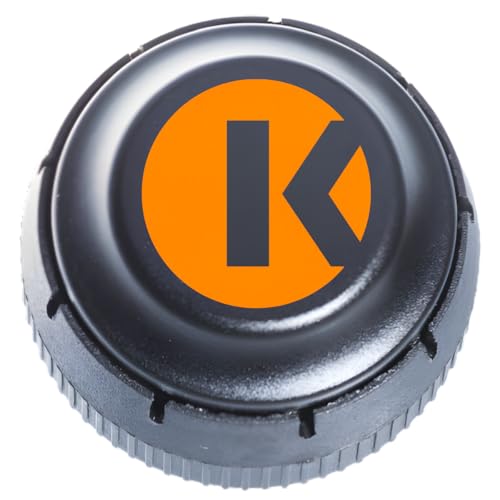
Designed specifically for truck drivers and fleet operators, the My20 Electronic Logging Device (ELD) stands out as an affordable and accessible solution for GPS tracking. It’s FMCSA compliant and connects easily via standard 9-pin J1939, 6-pin J1708, or OBD-II diagnostic ports. You won’t need extra hardware—just your smartphone and the free My20 app. While there’s a subscription requirement, it’s prepaid annually, making budgeting straightforward. Installation is a breeze; simply connect the device to your truck’s ECM. After that, download the app, link your phone via Bluetooth, and you’re ready to track your driving hours efficiently!
Best For: Truck drivers and fleet operators looking for an affordable and user-friendly GPS tracking solution.
Pros:
- Affordable: The My20 ELD is the most affordable option on the market with no need for additional hardware.
- Easy Installation: Connecting to the truck’s ECM is straightforward, requiring minimal technical skills.
- User-Friendly App: The free My20 app allows seamless tracking and management of driving hours via Bluetooth.
Cons:
- Annual Subscription Required: Users must commit to a prepaid annual subscription for full functionality.
- Limited Port Compatibility: Requires specific adapters for OBD-II or 6-pin ECM ports, which may not be included.
- Dependent on Smartphone: The system relies on a smartphone, which may be a drawback for those who prefer standalone devices.
OBD2 Bluetooth Scanner for iPhone and Android

The OBD2 Bluetooth Scanner is an essential tool for car enthusiasts and professional mechanics alike, as it seamlessly connects to your iPhone or Android device to provide thorough diagnostic capabilities. This scanner works with most vehicles from 1996 onward, offering compatibility with popular brands like Toyota, Ford, and BMW. With free apps like Torque and OBD Fusion, you can read and erase diagnostic trouble codes, monitor engine performance, and reset the check engine light. You’ll get real-time data on battery voltage, acceleration, and more, ensuring your vehicle runs smoothly and efficiently. It’s a must-have for any serious driver.
Best For: Car enthusiasts and professional mechanics who need reliable diagnostic tools for modern vehicles.
Pros:
- Wide Compatibility: Works with most vehicles from 1996 onwards, including popular brands like BMW, Ford, and Toyota.
- Comprehensive Diagnostic Features: Reads and erases diagnostic trouble codes, monitors engine performance, and resets the check engine light.
- Real-Time Data Monitoring: Provides live sensor data, allowing users to track battery voltage, acceleration, and other key performance metrics.
Cons:
- Limited Compatibility with Diesel and Hybrid Vehicles: Not suitable for 24V diesel, hybrid, or non-OBDII models.
- iOS App Dependency: Requires use of downloaded apps for connection on iOS devices, which may limit usability.
- Potential Learning Curve: Users may need some time to familiarize themselves with the various apps and features for effective use.
REED Instruments R16X0-KIT Data Logging Bluetooth Smart Series Kit

For professionals seeking a versatile and efficient data logging solution, the REED Instruments R16X0-KIT is an exceptional choice. This kit lets you connect, measure, and log data from up to six instruments simultaneously, making it incredibly flexible. You’ll appreciate the easy setup, as automatic app integration eliminates the need for Bluetooth pairing. Measurement data can be displayed in various formats, including tables and graphs, enhancing your analysis. Plus, you can save your data in PDF or Excel formats, allowing for custom reports that can be stored on your mobile device or emailed directly. It truly elevates your data management experience.
Best For: Professionals in need of a versatile data logging solution that allows for simultaneous measurement from multiple instruments.
Pros:
- Easy setup with automatic app integration, eliminating the need for Bluetooth pairing.
- Flexible data display options including tables and graphs for enhanced analysis.
- Ability to save data in PDF or Excel formats, facilitating custom report creation and sharing.
Cons:
- Limited to connecting only six instruments at a time, which may not meet the needs of larger operations.
- Dependence on mobile device compatibility for data management and reporting functions.
- Potential learning curve for users unfamiliar with data logging applications or software.
CGSULIT Car Code Reader SC301 OBD2 Scanner
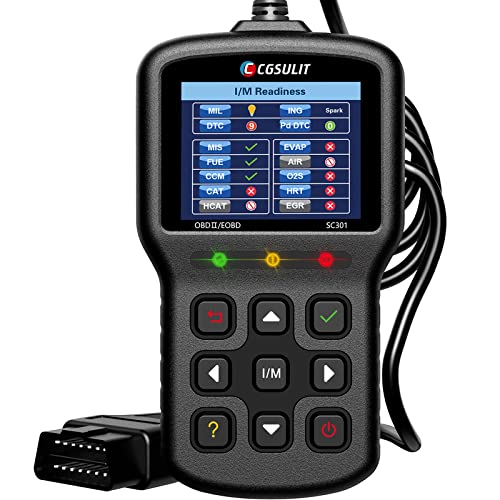
If you’re a DIY mechanic or just someone who wants to stay informed about your vehicle’s health, the CGSULIT Car Code Reader SC301 OBD2 Scanner is an invaluable tool. Designed for vehicles post-1996, this scanner offers features like error code reading/clearing and live data access. You can easily reset the check engine light, perform EVAP leak tests, and retrieve VINs. Its one-click I/M readiness feature helps you guarantee compliance for smog tests, while the built-in library of over 10,000 DTCs provides definitions and troubleshooting tips. With plug-and-play functionality, you’ll identify problems quickly and efficiently.
Best For: DIY mechanics and vehicle owners looking to monitor and troubleshoot their car’s health efficiently.
Pros:
- User-friendly plug-and-play design allows for quick setup and use without needing batteries.
- Comprehensive DTC lookup with over 10,000 codes, providing instant definitions and troubleshooting advice.
- Live data access enables real-time monitoring and recording of engine parameters for effective diagnostics.
Cons:
- Limited to vehicles manufactured post-1996, which may exclude older models.
- Basic functionalities may not satisfy professional mechanics needing advanced features.
- No advanced features like bi-directional control or advanced troubleshooting options compared to higher-end models.
100 PSI Pressure Sensor for Fuel Oil Coolant
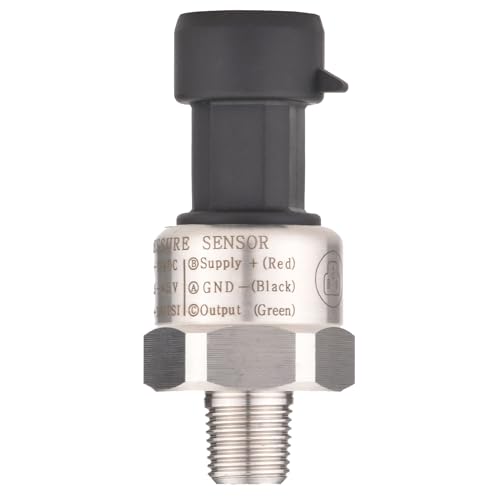
Engineers and automotive professionals seeking precise monitoring will find the 100 PSI Pressure Sensor for Fuel Oil Coolant an invaluable tool. This sensor’s range of 0-100 PSI is perfect for monitoring fuel, oil, coolant, and back pressures. With an output voltage of 0.5V to 4.5V, it integrates seamlessly with EFI and data logging systems. Its 1/8″ NPT thread size guarantees easy installation. Made from high-quality materials, this durable sensor offers a longer service life, making it a reliable choice for your projects. Just check the compatibility with your model before purchasing to ascertain ideal performance.
Best For: Engineers and automotive professionals needing precise monitoring of fuel, oil, and coolant pressures.
Pros:
- Durable and wear-resistant: Made from high-quality materials to ensure a longer service life.
- Wide pressure range: Capable of monitoring up to 100 PSI, suitable for various applications.
- Easy installation: Features a standard 1/8″ NPT thread size for straightforward setup.
Cons:
- Compatibility check required: Users must verify model compatibility before purchasing to avoid issues.
- Limited output voltage range: The output voltage range of 0.5V to 4.5V may not suit all systems.
- Potential for overpressure: Exceeding the 100 PSI limit can damage the sensor if not monitored correctly.
AIOMEST Photo Tachometer Non-Contact Speed Meter (AI-9235C)

The AIOMEST Photo Tachometer Non-Contact Speed Meter (AI-9235C) stands out for its impressive accuracy of +/- 0.01%, making it an ideal choice for professionals who demand precision in RPM measurements. It measures RPM from 7.0 to 99,999 RPM and features a detection distance of up to 23 inches, ensuring non-contact convenience. With a built-in class II laser pointer and a large LCD screen, you’ll easily target and read measurements, even in low-light conditions. Plus, its internal data logger can store up to 10 sets of data, enhancing your analysis capabilities across various applications.
Best For: Professionals and hobbyists in automotive, woodworking, and metalworking industries who require precise RPM measurements.
Pros:
- High accuracy with a measurement range of 7.0 to 99,999 RPM, ensuring reliable results.
- Non-contact measurement with a detection distance of up to 23 inches for convenience and safety.
- Data logging capabilities that store up to 10 sets of data, enhancing analysis and tracking.
Cons:
- Limited to RPM measurements, which may not cater to users needing multi-functional testing.
- Class II laser pointer requires caution during use, as it can be harmful to the eyes if misused.
- Batteries not rechargeable, leading to additional costs for replacements over time.
ELD Mandate’s Electronic Logging Device with Truck GPS Tracking

For trucking companies seeking a reliable solution to meet FMCSA compliance, ELD Mandate’s Electronic Logging Device with Truck GPS Tracking stands out as an ideal choice. This FMCSA-certified device guarantees Hours of Service compliance and enhances vehicle safety through electronic driver vehicle inspection reports. Installation is a breeze with step-by-step instructions, and it connects via Bluetooth for real-time GPS tracking. Plus, you’ll benefit from 24/7 customer support in multiple languages. With vehicle diagnostics, IFTA mileage calculations, and a free mobile app for easy data access, you’ll have everything you need for efficient fleet management at your fingertips.
Best For: Trucking companies seeking a reliable and compliant solution for electronic logging and fleet management.
Pros:
- FMCSA-certified for complete compliance control and enhanced vehicle safety.
- Easy installation and connectivity with Bluetooth for real-time GPS tracking.
- 24/7 multilingual customer support ensures quick issue resolution.
Cons:
- Best Sellers Rank indicates it may not be a top choice among all GPS trackers.
- Limited to one year subscription, requiring renewal for continued service.
- Historical records are only stored for up to six months, which may not meet all users’ needs.
Factors to Consider When Choosing a Professional Engine Data Logging System
When you’re choosing a professional engine data logging system, you’ll want to take into account several key factors. Think about compatibility with your vehicles, the data logging capabilities you need, and how easy it is to install. Don’t forget to evaluate the user interface design and whether it offers real-time monitoring features that suit your operation.
Compatibility With Vehicles
Choosing the right professional engine data logging system hinges on its compatibility with your vehicle. First, verify it connects properly to your vehicle’s diagnostic interface, like OBD-II, J1939, or J1708. Compatibility can vary greatly among different makes and models, so check that the system supports your specific vehicle. Also, confirm that it meets your vehicle’s voltage requirements; most systems work with 12V but may not suit 24V systems in heavy-duty trucks. Additionally, review the supported protocols to make sure it can read both generic and manufacturer-specific diagnostic trouble codes (DTCs). Finally, look for features tailored to your engine type, such as real-time data streaming and performance testing, to maximize functionality.
Data Logging Capabilities
How can you guarantee that your engine data logging system captures all the essential metrics? Look for a system with real-time data monitoring capabilities to track critical parameters like RPM, temperature, and pressure during operation. Internal data logging is fundamental, allowing you to store multiple data sets for effective trend analysis and performance evaluation. Confirm compatibility with various sensors and protocols to collect diverse engine metrics from different components. The ability to display data in graphs and tables enhances your understanding and helps troubleshoot issues efficiently. Finally, check if the system offers options for exporting data in formats like PDF or Excel, making it easy to analyze and share your findings.
Installation Complexity
Understanding data logging capabilities sets the stage for evaluating installation complexity in professional engine data logging systems. The complexity of installation can vary greatly based on whether the system uses a plug-and-play interface or requires intricate wiring and configuration. Systems that connect directly to existing diagnostic ports, like OBD-II or J1939, typically offer simpler installations. Many modern systems include step-by-step installation instructions or user-friendly apps, making setup easier. However, if you need additional tools or adapters for different vehicle models or protocols, installation can get more complicated. A straightforward process minimizes downtime and reduces the need for professional help, making it more accessible for you to get your engine data logging system up and running efficiently.
User Interface Design
When evaluating a professional engine data logging system, the user interface design plays an essential role in your overall experience. A user-friendly interface enhances accessibility, allowing you to navigate through features effortlessly, which is vital for quick diagnostics. Clear visualization of data through graphs, tables, and instrument readings helps you interpret complex information at a glance, improving your decision-making. Touchscreen compatibility and responsive design further enhance usability, providing intuitive controls and real-time interaction. Customizing the dashboard layout to suit your preferences makes frequently accessed data easily reachable. Additionally, integration with mobile apps for data management can boost usability, allowing you to track and analyze engine performance on-the-go, making your experience smoother and more efficient.
Real-Time Monitoring Features
A user-friendly interface sets the stage for effective real-time monitoring features in a professional engine data logging system. These features enable you to continuously track critical engine parameters like RPM, temperature, and pressure, giving you immediate insights into performance. Advanced systems display live sensor data, allowing you to visualize trends and detect anomalies as they happen. With multiple data visualization formats, including graphs and tables, analyzing and troubleshooting engine issues becomes much easier. Real-time data access enhances your decision-making process by providing instant feedback on vehicle performance and potential mechanical problems. Plus, many modern logging systems offer Bluetooth connectivity, letting you access live data remotely while you’re on the go, ensuring you stay informed at all times.
Connectivity Options
Choosing the right connectivity options for your professional engine data logging system can greatly impact its usability and effectiveness. Look for systems that support Bluetooth for wireless data transfer and real-time monitoring on your mobile devices. Many devices utilize OBD-II diagnostic ports, which standardize communication protocols, making integration with modern vehicles seamless. If you’re working with heavy-duty trucks, consider systems that support multiple connection types like J1939 and J1708 for broader compatibility. A plug-and-play installation feature is also a big plus, simplifying connectivity without needing specialized tools. Finally, verify that your system can sync data with various apps on both Android and iOS platforms, enhancing your data analysis experience and accessibility.
Subscription and Costs
Understanding the costs associated with professional engine data logging systems is essential for making an informed decision. Many systems require a subscription for full functionality, with fees varying considerably based on features. These subscription costs often include software updates, customer support, and enhanced capabilities, so it’s vital to evaluate their value against your needs. Some systems may offer a free basic version, but advanced features typically come at a price, highlighting the importance of understanding the tiered pricing structure. Additionally, keep in mind that initial hardware costs may be separate from subscription fees. Evaluating total ownership costs over time and being aware of potential hidden charges—like fees for extra vehicle credits or data storage—can help you better budget your investment.
Support and Resources
When evaluating professional engine data logging systems, it is crucial to take into account the level of support and resources available to you. Look for systems that provide thorough customer support, including technical assistance and user manuals for troubleshooting. Online resources like FAQs, forums, and tutorial videos can greatly enhance your learning and problem resolution. Also, consider whether the manufacturer offers regular software updates and patches to keep your system compatible with evolving vehicle technologies. An active community or user network can be invaluable for sharing experiences and best practices. Finally, check if there are dedicated account managers or customer support representatives ready to assist with specific technical inquiries, ensuring you get the most out of your system.