When it comes to maintaining your vehicle or equipment, having the right oil evacuation system can make all the difference. You need something efficient and reliable, whether you’re a professional or a DIY enthusiast. From compact models to larger tanks, there are plenty of options that cater to your needs. Curious about which systems stand out and what features you should consider? Let’s explore the top choices available for effortless maintenance.
JohnDow Industries JDI-6EV 6 Gallon Fluid Evacuator

If you’re looking for an efficient and reliable way to manage fluid evacuation in your shop, the JohnDow Industries JDI-6EV 6 Gallon Fluid Evacuator is an excellent choice. This unit uses a venturi vacuum system powered by compressed air, making it simple to create a vacuum in the sturdy steel tank. The easy-to-read vacuum gauge lets you monitor suction levels effortlessly. With a 7-foot suction hose, six probes, and three “OE Style” adapters, you’ll achieve ideal fitment for various applications. Plus, the self-evacuation mechanism and onboard storage tube facilitate quick cleanup and maintenance, keeping your workspace organized.
Best For: The JohnDow Industries JDI-6EV 6 Gallon Fluid Evacuator is best for automotive professionals and workshops looking for an efficient fluid management solution.
Pros:
- Easy to use venturi vacuum system powered by compressed air for quick fluid evacuation.
- Includes multiple probes and adapters for versatility in various applications.
- Self-evacuation mechanism and onboard storage enhance convenience and organization.
Cons:
- Requires a source of compressed air to operate, which may limit portability.
- The 6-gallon capacity may not be sufficient for larger jobs or high-volume fluid changes.
- Initial setup may require some time to familiarize with the various components and features.
Mityvac MV7400 Automotive Fluid Evacuator Extractor Pump

The Mityvac MV7400 Automotive Fluid Evacuator Extractor Pump stands out as an ideal choice for both professionals and DIY enthusiasts who need a reliable tool for fluid extraction. With a 1.9-gallon capacity, it efficiently extracts oil, transmission fluid, brake fluid, and coolant from various vehicles, including cars, trucks, and motorcycles. Its heavy-duty, chemical-resistant polyethylene construction guarantees durability, while the automatic overflow prevention system provides safe operation without spills. You’ll appreciate the integrated quick-drain spout for easy fluid disposal and the large stabilizing base that enhances usability, making it a must-have in any garage or workshop.
Best For: Professionals and DIY enthusiasts seeking a reliable tool for efficient automotive fluid extraction.
Pros:
- Durable Construction: Made from heavy-duty, chemical-resistant polyethylene ensuring long-lasting performance.
- Safety Features: Automatic overflow prevention system eliminates spills during extraction, promoting a clean workspace.
- User-Friendly Design: Integrated quick-drain spout and large stabilizing base enhance usability and ease of fluid disposal.
Cons:
- Manual Operation: Requires physical effort for operation, which may be less convenient for some users.
- Capacity Limitation: With a 1.9-gallon capacity, it may require multiple uses for larger vehicles or heavy-duty applications.
- No Electrical Components: Lacks electric or powered options, potentially limiting efficiency for some users.
Mityvac 7201 2.3 Gallon Fluid Evacuator Extractor and Dispensing Pump
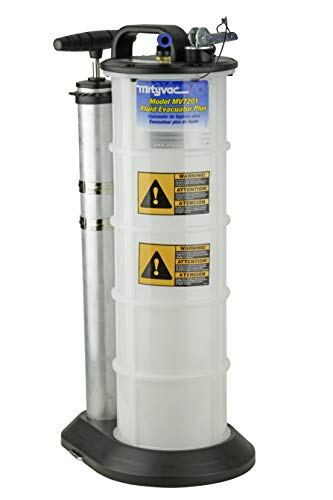
For those seeking efficiency in fluid management, the Mityvac 7201 2.3 Gallon Fluid Evacuator Extractor and Dispensing Pump stands out as an exceptional choice. It combines fluid extraction and dispensing, making it perfect for oil changes and coolant refills. With its push-button operation, you’ll enjoy easy, precise control over the process. Constructed from chemical-resistant polyethylene, it reliably handles various automotive fluids. The automatic overflow prevention system guarantees a mess-free experience, stopping extraction when full. Plus, its stable base and lightweight design enhance portability, catering to both professional mechanics and DIY enthusiasts alike.
Best For: The Mityvac 7201 is best for professional mechanics and DIY enthusiasts looking for an efficient fluid management solution.
Pros:
- Efficient fluid extraction and dispensing with push-button operation for precise control.
- Durable construction made from chemical-resistant polyethylene, suitable for various automotive fluids.
- Automatic overflow prevention system ensures mess-free operation by stopping extraction when full.
Cons:
- Limited capacity of 2.3 gallons may not be sufficient for larger jobs.
- Requires manual operation which may not be ideal for high-volume settings.
- Potential for spills if not monitored closely during the extraction process.
EWK 6.5L Pneumatic/Manual Oil Extractor Pump Tool
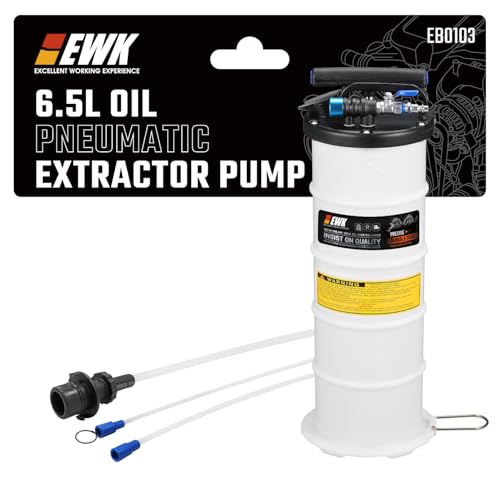
Designed with DIY mechanics in mind, the EWK 6.5L Pneumatic/Manual Oil Extractor Pump Tool offers a convenient solution for quick, spill-free oil changes. Its dual-mode extraction allows you to choose between manual operation outdoors or pneumatic speed in your garage, reaching a suction rate of 1.8 L/min. With extended suction tubes, it guarantees complete oil removal, keeping your engine clean and efficient. This versatile tool works with various fluids like engine oil and transmission fluid, making it great for cars, motorcycles, and more. Built for durability, it’s a trusted choice for both DIYers and professionals alike.
Best For: DIY mechanics looking for a quick and efficient solution for oil changes without the need to lift their vehicles.
Pros:
- Dual-mode extraction: Offers both manual and pneumatic options for flexibility in use.
- Rapid suction rate: Achieves a suction rate of 1.8 L/min, facilitating quick oil changes.
- Versatile compatibility: Works with various fluids, making it suitable for different types of vehicles and machinery.
Cons:
- Not compatible with specific models: Avoids use with Mercedes W212 E350 and C218 CLS 350.
- Limited to non-volatile fluids: Cannot be used with gasoline or other volatile liquids.
- Requires some manual effort: While pneumatic mode is fast, manual operation may require more physical effort in outdoor settings.
Mityvac MV7300 Pneumatic Vacuum Pump Fluid Evacuator
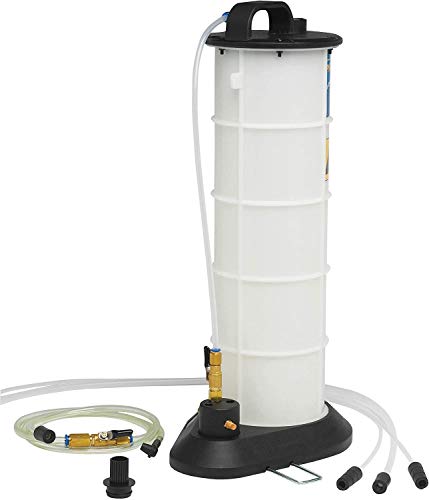
With its efficient use of compressed air, the Mityvac MV7300 Pneumatic Vacuum Pump Fluid Evacuator stands out as an essential tool for both DIY mechanics and professional technicians. This 2.3-gallon unit quickly extracts fluids like oil, brake fluid, and coolant, making it versatile for various applications. Its chemical-resistant polyethylene construction guarantees durability against harsh liquids. You’ll appreciate the safety features, including an air shut-off valve to prevent spills and a quick-drain spout for hassle-free disposal. Plus, the large base offers stability during use, making it a reliable choice for garages, shops, and mobile service operations.
Best For: DIY mechanics and professional technicians seeking an efficient fluid extraction solution for automotive, marine, and industrial applications.
Pros:
- Quick and efficient fluid extraction using compressed air.
- Durable construction from chemical-resistant polyethylene ensures longevity.
- Safety features like air shut-off valve and quick-drain spout enhance usability and prevent spills.
Cons:
- Requires a compressed air source to operate, limiting portability.
- The 2.3-gallon capacity may be insufficient for larger fluid extraction jobs.
- Initial setup and connection to air supply may be cumbersome for some users.
OEMTOOLS Pneumatic/Manual Fluid Extractor (2.5 Gallon)

The OEMTOOLS Pneumatic/Manual Fluid Extractor (2.5 Gallon) stands out as an excellent choice for both professional technicians and DIY enthusiasts looking for versatility in their oil evacuation systems. With its dual operation, you can easily switch between pneumatic and manual extraction, perfect for garages without air supply. This extractor cleans without removing plugs, letting you extract various fluids through dipstick tubes, which saves you time and effort. Plus, the automatic shut-off valve enhances safety by preventing spills. Its durable design includes a 5-foot suction hose and 41 adapters, ensuring you have access to deeper reservoirs in any vehicle.
Best For: The OEMTOOLS Pneumatic/Manual Fluid Extractor is best for professional technicians and DIY enthusiasts who need a versatile and efficient solution for fluid extraction without the hassle of removing plugs.
Pros:
- Dual operation allows for both pneumatic and manual extraction, making it versatile for different garage setups.
- Automatic shut-off valve enhances safety by preventing overfilling and spills.
- Includes a 5-foot suction hose and 41 adapters for accessing deeper fluid reservoirs in various vehicles.
Cons:
- The 2.5-gallon capacity may not be sufficient for larger jobs requiring more fluid extraction.
- Pneumatic operation requires an air supply, which may limit use in some settings.
- Some users may find the need for multiple adapters cumbersome for different vehicle types.
VEVOR 6.5L Pneumatic/Manual Oil Extractor Pump

If you’re looking for a reliable solution for fluid extraction, the VEVOR 6.5L Pneumatic/Manual Oil Extractor Pump stands out as an ideal choice for both DIY enthusiasts and professional mechanics. With dual-mode operation, you can quickly switch between pneumatic for speed and manual for simplicity. Its all-in-one kit includes everything you need, like a 6.5L tank and various tubes for different liquids. The streamlined four-step process keeps your hands clean while efficiently changing fluids in cars, motorcycles, and more. Whether you’re at home or in the shop, this extractor guarantees a hassle-free maintenance experience.
Best For: DIY enthusiasts and professional mechanics looking for a versatile and efficient fluid extraction solution.
Pros:
- Dual-mode operation allows quick switching between pneumatic speed and manual ease.
- Comprehensive all-in-one kit includes various tubes for different fluid types.
- Simplified four-step process keeps hands clean and minimizes mess during fluid changes.
Cons:
- Pneumatic mode may require an air compressor for operation, which may not be available to all users.
- Limited to fluids compatible with the extraction system; may not work with thicker substances.
- Potentially bulky design may require more storage space compared to simpler manual pumps.
6.5L Oil Extractor – Pneumatic/Manual Vacuum Fluid Extractor

For automotive enthusiasts and professionals seeking a reliable solution for fluid extraction, the 6.5L Oil Extractor stands out with its dual functionality. You can easily switch between pneumatic and manual operation, making it versatile for any garage, even without a gas source. This extractor’s extended hoses accommodate various automotive fluids, including transmission and brake oil. With upgraded pipes of different diameters, you’ll achieve thorough extraction every time. Constructed from high-quality materials, it guarantees durability and safety to prevent leaks. Plus, it comes with a user manual and after-sales support, so you’re never left in the lurch.
Best For: Automotive enthusiasts and professionals looking for a versatile and efficient fluid extraction solution.
Pros:
- Dual functionality allows for both pneumatic and manual operation, enhancing versatility.
- Extended hoses make it suitable for extracting a variety of automotive fluids, including transmission and brake oil.
- High-quality construction ensures durability and prevents leaks, ensuring safe operation.
Cons:
- Pneumatic operation may require access to an air compressor, limiting use in certain locations.
- Size and weight may make it less portable compared to smaller extractors.
- Learning curve for first-time users unfamiliar with vacuum extraction techniques.
Lincoln 3639 25 Gallon Fluid Drain and Evacuator Tank Combo
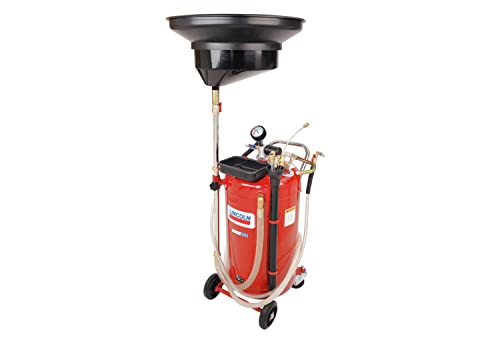
Designed with versatility in mind, the Lincoln 3639 25 Gallon Fluid Drain and Evacuator Tank Combo is ideal for mechanics and service shops that handle a wide range of vehicles, from cars to heavy-duty machinery. With an adjustable funnel height from 51 to 76 inches, you can easily accommodate different vehicle types. Its built-in safety valve and fluid level sight gauge guarantee safe and precise operation. The thorough hose system, featuring a 7-foot discharge hose and multiple evacuation wands, simplifies fluid management. Plus, its durable construction means it’s perfect for industrial use, making maintenance a breeze in any setting.
Best For: The Lincoln 3639 25 Gallon Fluid Drain and Evacuator Tank Combo is best for mechanics and service shops that require efficient fluid collection and disposal for a variety of vehicle types.
Pros:
- Adjustable funnel height from 51 to 76 inches accommodates various vehicle sizes.
- Built-in safety valve and fluid level sight gauge enhance safe and precise operation.
- Durable, portable design suitable for both industrial and DIY garage use.
Cons:
- The tank’s large size may require significant storage space.
- May be cumbersome for solo operators to maneuver without assistance.
- The price point may be higher compared to simpler fluid management solutions.
FOUR UNCLES 6.5L Oil Extractor – Pneumatic/Manual Vacuum Fluid Extractor

The FOUR UNCLES 6.5L Oil Extractor stands out as an ideal choice for DIY enthusiasts and professional mechanics alike, thanks to its dual usage modes. You can use it in pneumatic mode for speedy extraction at 1.8 L/min or switch to manual mode, requiring no extra equipment. This versatile tool extracts every drop of oil, making engine changes mess-free—just open the hook, insert the tube, and you’re all set. With four tubes of varying diameters, it’s perfect for cars, trucks, boats, and lawn mowers. Enjoy effortless maintenance anywhere, whether in your garage or outdoors.
Best For: DIY enthusiasts and professional mechanics looking for a versatile and efficient oil extraction solution.
Pros:
- Fast extraction speed of 1.8 L/min, allowing for quick oil changes.
- Dual usage modes (pneumatic and manual) offer flexibility for different user preferences and situations.
- Includes multiple tubes of varying diameters, making it suitable for a wide range of vehicles and equipment.
Cons:
- Pneumatic mode may require access to an air compressor, which could limit use in some situations.
- The size of the extractor (6.5L) may be cumbersome for storage in smaller workshops or garages.
- Initial setup for pneumatic mode might be slightly more complex for novice users.
Factors to Consider When Choosing a Shop Grade Oil Evacuation System
When you’re picking a shop grade oil evacuation system, there are several key factors to keep in mind. Think about fluid capacity, extraction methods, and the durability of materials. Also, consider safety features and how easy it is to store and transport the system.
Fluid Capacity Considerations
Choosing the right oil evacuation system hinges on fluid capacity, which plays a crucial role in meeting your specific needs. Consider options ranging from 1.9 to 25 gallons. If you run a high-volume workshop, a 25-gallon system will handle frequent oil changes for multiple vehicles or heavy-duty machinery efficiently. On the other hand, smaller systems, with capacities around 2.3 to 6.5 gallons, are perfect for personal use or smaller shops, making them easy to handle and store. Remember to assess the types of fluids you’ll be extracting; larger capacities may be necessary for viscous fluids like coolant. Selecting a system with adequate capacity helps improve workflow efficiency by minimizing the need for frequent emptying during oil changes.
Extraction Method Options
With fluid capacity established, it’s time to contemplate how the extraction method impacts your oil evacuation system’s efficiency and usability. You can choose between manual and pneumatic systems. Manual systems are often more affordable and give you control over the extraction process, but they require more physical effort. On the other hand, pneumatic systems utilize compressed air for faster extraction, making them perfect for busy workshops. Some models even combine both methods, offering versatility and the option to operate without an air supply. Remember, the extraction method greatly affects how quickly and easily you can remove fluids. Also, consider the types of fluids you’ll be handling, as some systems are designed for a broader range of automotive fluids.
Material Durability Requirements
As you evaluate oil evacuation systems, consider that material durability is vital for guaranteeing longevity and reliable performance. The system must withstand harsh chemicals and fluids without degrading or leaking. Look for chemical-resistant polyethylene, which offers strength and handles various automotive fluids effectively. Tanks made from heavy-duty steel or robust plastic enhance resistance to impact and corrosion, important in demanding shop environments. Confirm the construction includes precision-sealed tanks and durable tubing to prevent leaks during fluid extraction. A well-constructed oil evacuation system not only extends its lifespan but also reduces the need for frequent replacements, ultimately saving costs for your automotive shop. Prioritizing material durability will lead to a more efficient and dependable maintenance process.
Safety Features Importance
When evaluating oil evacuation systems, safety features play a significant role in guaranteeing a secure and efficient operation. Automatic shut-off valves are essential, preventing spills and fluid waste during extraction. Overflow prevention systems stop the process when the tank reaches capacity, keeping your workspace clean and hazard-free. Air shut-off valves further protect against unintended fluid release, lowering the risk of accidents in both automotive and industrial settings. Additionally, built-in safety valves and fluid level sight gauges allow you to monitor operations precisely. Opting for systems with thorough safety designs not only enhances your working environment but also supports compliance with safety regulations. Prioritizing these features guarantees you can maintain a safe and effective workflow.
Portability and Storage
Portability and storage are essential factors to evaluate in choosing a shop-grade oil evacuation system. You’ll want a lightweight model with a compact design, making it easy to transport between job sites. Look for systems that include onboard storage for hoses and accessories; this keeps everything organized and reduces the risk of losing parts. A durable carrying handle or wheels can greatly enhance mobility, especially with larger systems in tight spaces. Consider the size of the evacuation tank—smaller tanks are more portable but require frequent emptying, while larger tanks can be cumbersome. Finally, choose storage solutions that allow for vertical or compact stowing to maximize space efficiency in your workshop or garage.
Compatibility With Fluids
Choosing the right shop-grade oil evacuation system means considering its compatibility with various automotive fluids. You’ll want a system that can handle engine oil, transmission fluid, brake fluid, and coolant to maximize its utility. Different systems vary in capability; some are designed for lighter fluids, while others manage heavier liquids and complex chemical compositions. Look for features like automatic overflow prevention to avoid spills and guarantee safe operation when extracting hazardous fluids. Systems with multiple suction probes or adapters enhance compatibility, making it easier to extract from diverse vehicle models and fluid reservoirs. Finally, verify the materials used are durable and resistant to chemical degradation for long-lasting performance and reliability.
Maintenance and Cleanup Ease
While evaluating oil evacuation systems, maintenance and cleanup ease should be a top priority. Look for features like a catch cap or residue collection mechanism to capture any drips or spills, simplifying your cleanup process. Systems with onboard storage for hoses and probes keep your workspace organized, preventing parts from getting misplaced. Quick disconnect evacuation hoses allow for rapid, mess-free disposal of extracted fluids, enhancing efficiency. Additionally, automatic shut-off or overflow prevention systems minimize the risk of spills during extraction, reducing cleanup efforts. Finally, choose a system with simple design elements, such as easy-access drain spouts, to streamline maintenance and disposal processes for automotive fluids. Prioritizing these features will save you time and hassle in the long run.